“He has made everything beautiful in its time. He has also set eternity in the human heart; yet no one can fathom what God has done from beginning to end. (Ecclesiastes 3:11 NIV)
“For I know the plans I have for you,” declares the Lord, “plans to prosper you and not to harm you, plans to give you hope and a future.”
(Jeremiah 29:11 NIV)
Recently, someone dear to me was deeply bothered that two very important areas of her life seemed to be receiving no attention from God. It felt to her as though many other areas were moving forward, yet these two remained still and silent. As she poured out her heart, I felt truly sorry for her – haven’t we all been there? I honestly didn’t know what to say in that moment. But the Holy Spirit is called our Comforter for a reason. His love for His children runs so deep that, if it takes speaking through another person to reach you, He will place the exact words you need to hear in their mouth.
Mid-conversation, an analogy dropped in my heart. I heard: “Remember when you’re cooking in the kitchen?”
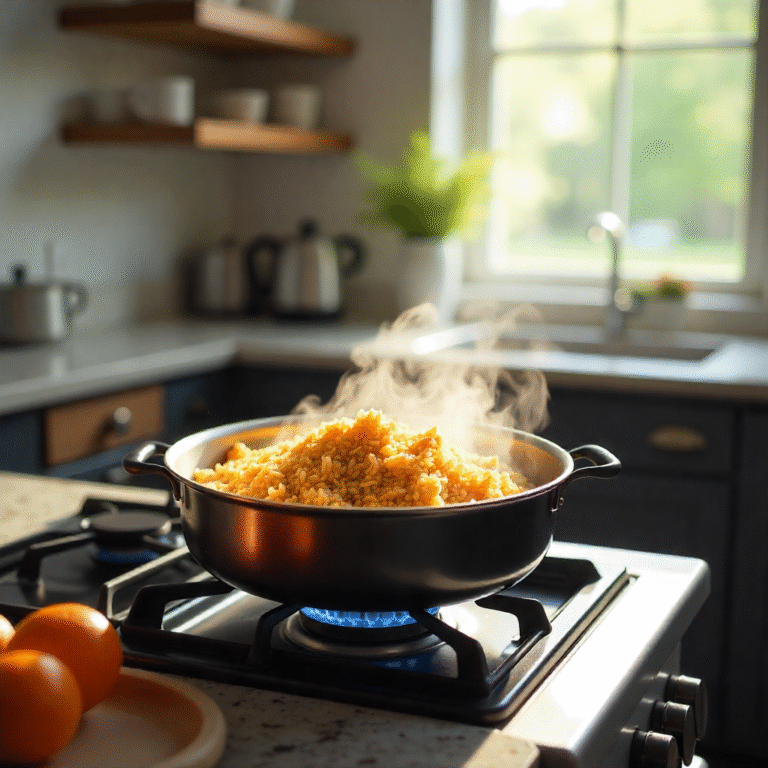
You’re preparing something sumptuous, maybe even the family’s favourite jollof rice, with nicely fried chicken and chilled watermelon–pineapple juice. The kind of meal the family eagerly looks forward to. But these things take time. Jollof is not a dish you rush. White rice may take 20 minutes, but jollof can take 45 minutes to an hour because it needs more steam than fire to reach its full taste.
Meanwhile, your children are pacing the kitchen like hungry little lambs. Their cries of “Mommy, I’m hungry!” fill the room. They ask for biscuits, Ribena, chinchin, chocolate – anything to quiet the ache in their stomachs. I understand how they feel, and I don’t dismiss it. Sometimes, after their persistent asking, I sigh and say, “Fine, take it.” But deep down I know this isn’t my best for them. What I am cooking will nourish and satisfy them in ways a snack never could.
That day, more than ever before, I finally understood what the permissive and the perfect will of God look like. Snacks will not kill you, but neither will they nourish or truly satisfy. His perfect will, like the jollof simmering on the fire, takes time – but when it is ready, it fills you to overflowing.
Abraham | Israel | Joseph | David
Abraham is one who tasted this difference. God promised him a son, but the waiting stretched long. Impatient, he listened to Sarah and had a child through Hagar. Ishmael was not evil, but he was not God’s best. Isaac, the child of promise, came later in God’s perfect timing (Genesis 16; Genesis 21).
Israel also demanded a king before God’s appointed time. Though God wanted to establish His rule in His way, they cried, “Give us a king like the nations!” (1 Samuel 8:19–20). God permitted it, but it brought sorrow and bondage. His perfect plan was not that they be ruled like the nations around them but that He Himself be their King.
On the other hand, Joseph shows us what it looks like to wait. Sold into slavery and imprisoned, it seemed God was silent in the most important areas of his life (freedom, family, and justice). Yet, in the fullness of time, God lifted him from the dungeon to the palace (Genesis 41:41–43). Had Joseph grown impatient and chosen compromise, he would have missed the throne prepared for him.
David too knew this lesson. Anointed as king in his youth, he spent years fleeing from Saul. Twice he had opportunities to kill Saul and take the throne by force, but he refused. He said, “I will not lay my hand on my lord, because he is the Lord’s anointed” (1 Samuel 24:10). David waited for God’s perfect will, and in time, God established his throne.
Active Waiting
Waiting for God’s timing does not mean folding our arms and doing nothing. True waiting is not idleness; it is trust in motion. It is choosing to worship instead of worry, to thank Him for what He has revealed and for what He has not yet shown.
Paul wrote, “Give thanks in all circumstances; for this is God’s will for you in Christ Jesus” (1 Thessalonians 5:18). Gratitude is one of the highest forms of waiting. When you thank Him for His will that you know, and for His will that you are unaware of, you are saying, “Father, I trust You completely, whether I see or I don’t.”
Think of Paul and Silas in prison. They didn’t sit in despair, folding their arms. They prayed and sang hymns to God, and God responded with an earthquake that broke their chains (Acts 16:25–26). Their waiting was active worship.
So, while God’s jollof is still steaming, let your “kitchen” be filled with the aroma of worship and thanksgiving.
Let God find you praising, trusting, and obeying in the little things He has already spoken.
That is how you wait for His best.