

I’ve been trying to write about this principle for a while now, but each time I tried, I couldn’t get past one thing; myself.
It’s easy to talk about values we’ve mastered. But when the message cuts close to the areas we’re still growing in, it gets harder. This is one of those areas.
Before I became a mum, I was the definition of punctual. Like, solid 100%. I would show up early for everything; interviews, weddings, lectures, even hangouts. But motherhood happened. And with it came chronic exhaustion, a scattered mind, and slow little humans who somehow like to do things at the last minute.
It wore me down. And without noticing, I slipped into the very thing I used to frown at.
But this is why I’m writing this.
Because I have realised that if we don’t intentionally cultivate punctuality before family life, we’ll carry a bad habit into a more demanding season and it’ll get worse. Lateness doesn’t magically go away with marriage or children. In fact, it multiplies under pressure. And if we don’t confront it, we’ll pass it down to the next generation.
So even though I now score myself a 70% on this principle, I’ve come to realise that writing, teaching, and practicing it, no matter how imperfectly, is how we rebuild. Not just for ourselves, but for the children watching us. It’s like being handed another opportunity to try again at something.
I still mess up, some mornings, I’m rushing, forgetting things, or just plain tired. Sometimes, it just gets real.
Like that day a brother saw me about to drive my son to school and noticed I was wearing two different slippers. I just put my head on the steering wheel and sighed. 😢😅.
If you told me that would ever be me, I would have argued tooth and nail. But here I am, imperfect, learning every day, and still trying. Because at the end of it all, it’s not about perfection. Sometimes you show up a little mismatched, but you show up still.
I keep trying, because I know it matters. Sometimes, I remind myself, “This is for them”…. And that keeps me going, even on the hardest days.
“African Time” Is Disrespectful
I know “African time” is often said jokingly or even with a sense of cultural pride. But when lateness becomes a habit, it can hurt more than just schedules. It can strain relationships and make people feel undervalued or unimportant and even cause them to stop taking you or your words seriously. It’s not just about being late; it’s about what that lateness communicates to those waiting on us.
And that can build up hurt or frustration over time. It’s something we should think about, especially when we’re trying to model respect and love for our family and friends.
Time is God-given. God works with time, He is outside of time but chooses to relate with us within it. When He makes a promise, He honors the time attached to it.
Imagine if God hadn’t fulfilled His promise to send the Savior at the exact time He appointed?
Imagine if Jesus missed His “hour”?
Imagine if the children of Israel waited in exile without the hope that in seventy years they would be restored? Daniel traced that timing, because God had tied hope to time.
Every time God sends His word, there’s usually an appointed time for its fulfillment. And often, our alignment and preparation meet that timing to birth the promise (see Habakkuk 2:3).
So when we promise someone, “I’ll be there at 4,” and we show up at 4, we are not just keeping a schedule, we are expressing love, honour, and respect.
But when we consistently show up late, especially without remorse or effort to change, we communicate the opposite: that the other person’s time, and by extension, their value means little to us.
Why Punctuality Matters (And Yes, It’s Biblical)
God loves order. In fact, 1 Corinthians 14:40 says “Let all things be done decently and in order.” Ecclesiastes 3:1 says “To everything there is a season, a time for every purpose under heaven.” This means that He values time and seasons.
So when we model punctuality to our children, we’re not just teaching a social skill. We’re teaching them that honouring time is honouring God and others.
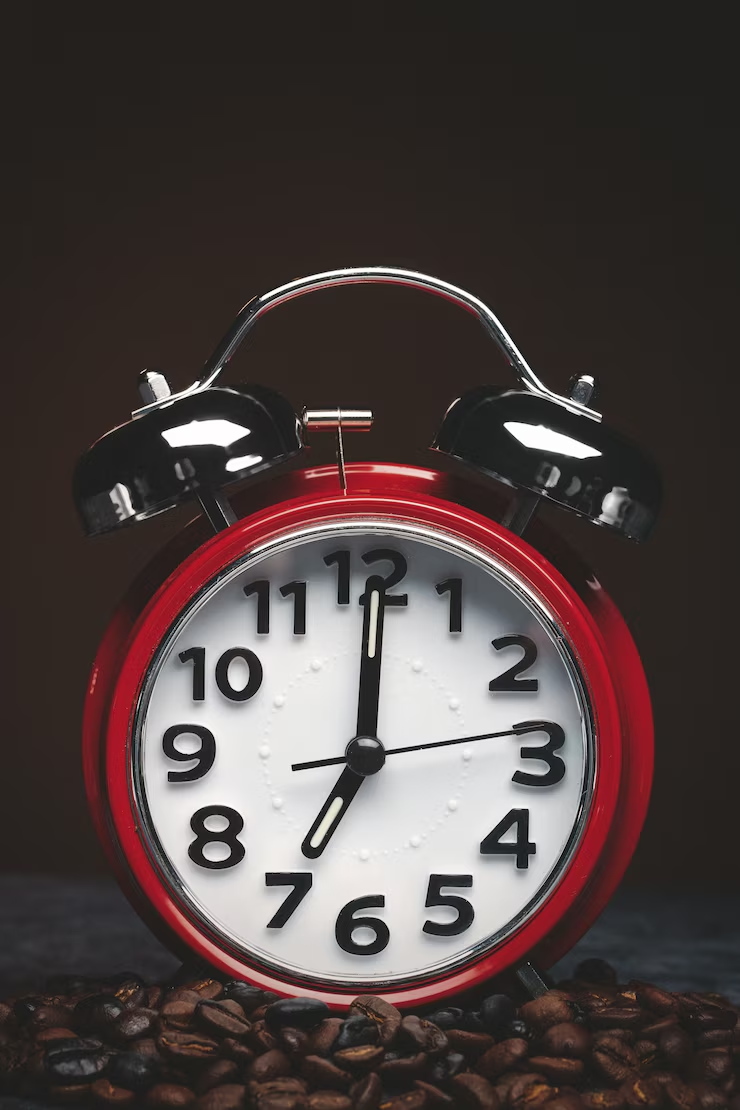
Real-Life Consequences of Lateness, Stewarding Time like the Treasure it is.
Many people have missed destiny moments simply because they were late. A job interview missed. A flight. A once-in-a-lifetime appointment. An idea shared five minutes too late. Some, if not careful, will be late even to their own wedding. 😅
Even establishments and organizations understand the value of time.
Airlines, for instance, don’t joke with it. They would rather cancel a flight than miss their assigned window to fly. And as many of us know, they won’t hesitate to leave you behind, even if you’re just five minutes late.
Yet, many who are habitual latecomers somehow manage to always arrive early at the airport. Why? Because they understand what they stand to lose. They know that missing that flight could disrupt everything, the meeting, the conference, the vacation, the wedding, the opportunity.
So, they prioritize it.
And that right there is the heart of the matter.
Punctuality often boils down to what we consider important.
When something truly matters to us, whether it’s catching a flight or meeting someone we honour, we prepare, we sacrifice sleep, we set alarms, we plan ahead.

These days, airlines have tried to make things easier.
If you miss your flight, there’s often the option to reschedule or roll your ticket forward, of course, that’s if you have the luxury of funds to afford it.
Some people are only able to travel because someone else paid for the flight, maybe it was a gift, a scholarship, a work opportunity, or a once-in-a-lifetime moment. For those ones, missing the flight isn’t just “inconvenient”, it could mean the door is permanently shut.
And that’s where this whole principle of punctuality gets personal.
If that option to rebook didn’t exist, if missing your flight meant forfeiting your seat, your money, your opportunity, full stop, would you still be late?
Would you still scroll endlessly in bed or move at half speed knowing what’s at stake?
That’s exactly what time is like.
Some opportunities don’t come back around. Some instructions from God have time stamps.
And when we treat time casually, especially in our homes, our children’s lives, our spiritual walk, we’re acting like someone who thinks they can just “book the next flight” whenever.
But what if there’s no “next flight”? What if this moment was the one window that could shift everything?
The real question is:
What does your pattern with time say about what (or who) you value?




Thank you.
This blessed me.